
Overview
What is Lean?
Common and street names
purple drank · sizzurp · codeine drink
Drug category
Drug mixture / opioid-containing drink
Forms and appearance
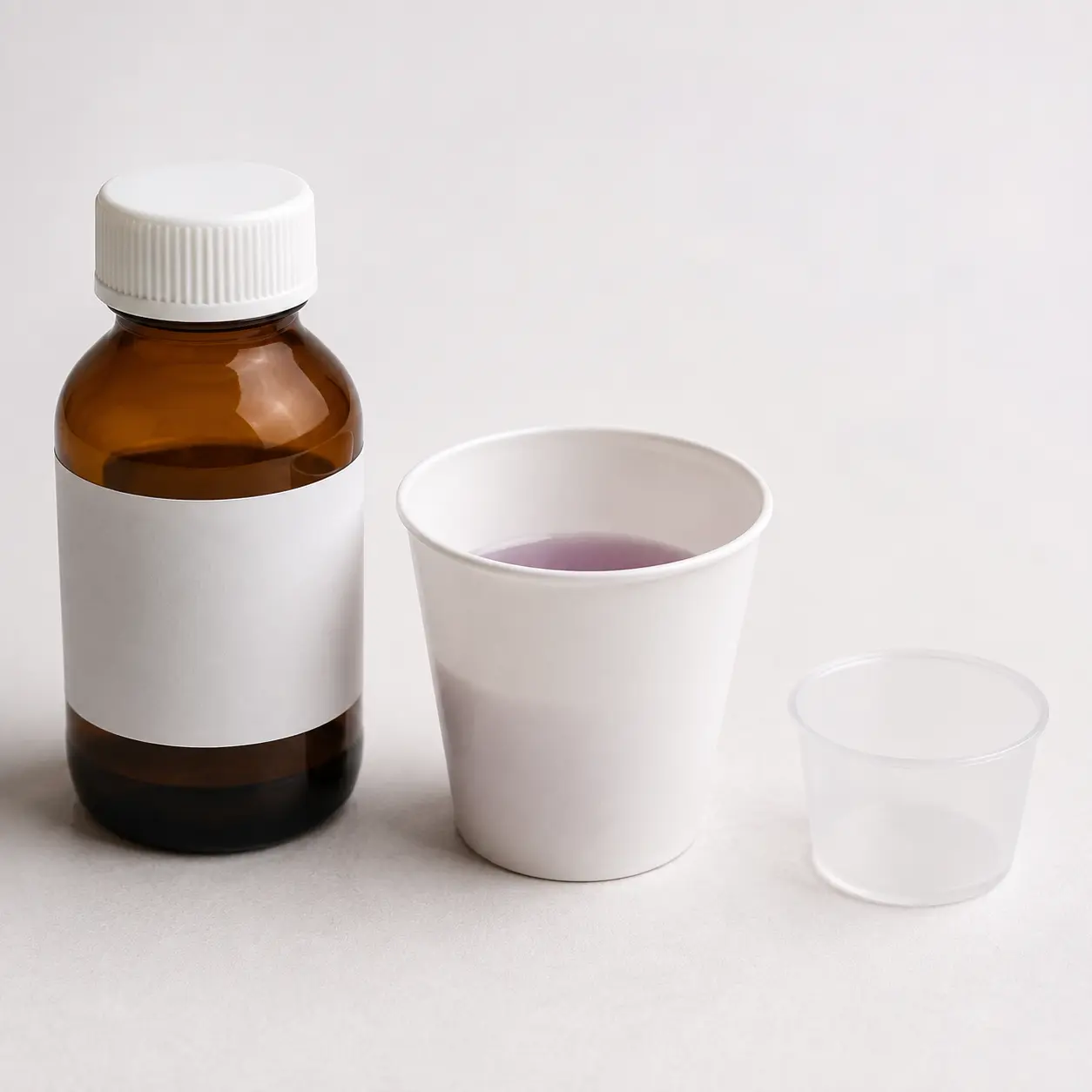
A mixed drink rather than a standard product. Colour, bottle type and flavour do not identify the medicines or strengths used.
How it is commonly used
Lean is swallowed as a drink. The critical question is what medicines and other substances are actually in the mixture, not the slang name used for it.
Brain & body
How Lean affects signalling and behaviour
Codeine is an opioid that is partly converted to morphine in the body. Opioid effects include analgesia, sedation and slowed breathing. Promethazine is a sedating antihistamine, so combining the ingredients can increase impairment and sedation.
Explore reward, cues, craving, stress, tolerance and neuroplasticity without a simplistic “hijacked brain” model.
Effects & risks
What people may experience — and what can go wrong
Commonly reported effects
- Sedation and relaxation
- Pain relief from opioid ingredients
- Drowsiness and slowed reactions
- Nausea, itching or constipation
Short-term risks
- Respiratory depression
- Loss of consciousness and aspiration
- Unpredictable effect where ingredients or strengths are unknown
- Additional medicine toxicity depending on the product used
Longer-term risks
- Opioid tolerance and dependence
- Constipation and sleep disruption
- Increasing dose or frequency as tolerance develops
- Harms from additional ingredients in repeated high exposure
Mental-health effects
Sedation may be experienced as relief from stress or emotional distress, which can reinforce repeated use. Low mood, reduced motivation and reliance on the mixture to regulate sleep or emotions can complicate change.
Dependence, tolerance & withdrawal
Repeated use can change the pattern
Regular opioid exposure can produce tolerance and physical dependence. Withdrawal may include aches, sweating, gastrointestinal symptoms, anxiety and insomnia. Assessment should consider every ingredient rather than treating Lean as a single substance.
Mixing drugs
Interaction risks to know
Lean + alcohol can increase sedation and respiratory depression.
Lean + benzodiazepines, pregabalin/gabapentin, GHB/GBL or other sedatives can substantially increase risk.
Other opioid medicines add to opioid exposure.
The absence of a recorded interaction does not mean that a combination is safe. Strength, dose, health, tolerance, contamination and other substances can alter risk.
Check another combinationHarm reduction
Practical ways to reduce risk
Do not assume two Lean preparations contain the same drugs or strength.
Avoid combining opioid-containing mixtures with alcohol, benzodiazepines or other sedatives.
Know the signs of opioid overdose and where to obtain naloxone.
Check medicine labels carefully: extra active ingredients can create additional risks.
Harm reduction can reduce some risks; it cannot make an unregulated drug, dose or combination risk-free.
Emergency
When to call 999
- Very slow, shallow or stopped breathing
- Blue, grey or very pale lips/skin
- Cannot be woken
- Gurgling, choking or pinpoint pupils alongside reduced consciousness
Treatment & support
Help does not require one fixed recovery goal
UK drug and alcohol services can assess physical health, mental health, dependence, risk, housing and support needs, then agree a plan with the person. Goals may include immediate harm reduction, stabilisation, reduction or stopping use.
Regular opioid exposure can produce tolerance and physical dependence. Withdrawal may include aches, sweating, gastrointestinal symptoms, anxiety and insomnia. Assessment should consider every ingredient rather than treating Lean as a single substance.
Brief history
How we got here
Codeine-based drinks became associated with music cultures in the southern United States during the late twentieth century, building on earlier syrup-and-drink practices. Online music, video and social media later spread the imagery far beyond its regional origins.
Read the history guideKey facts & misconceptions
Three useful corrections
Lean is not 'just cough syrup'.
Purple colour does not identify ingredients or strength.
A medicine being available on prescription does not make non-medical mixtures predictable or safe.
Explore Lean in greater depth
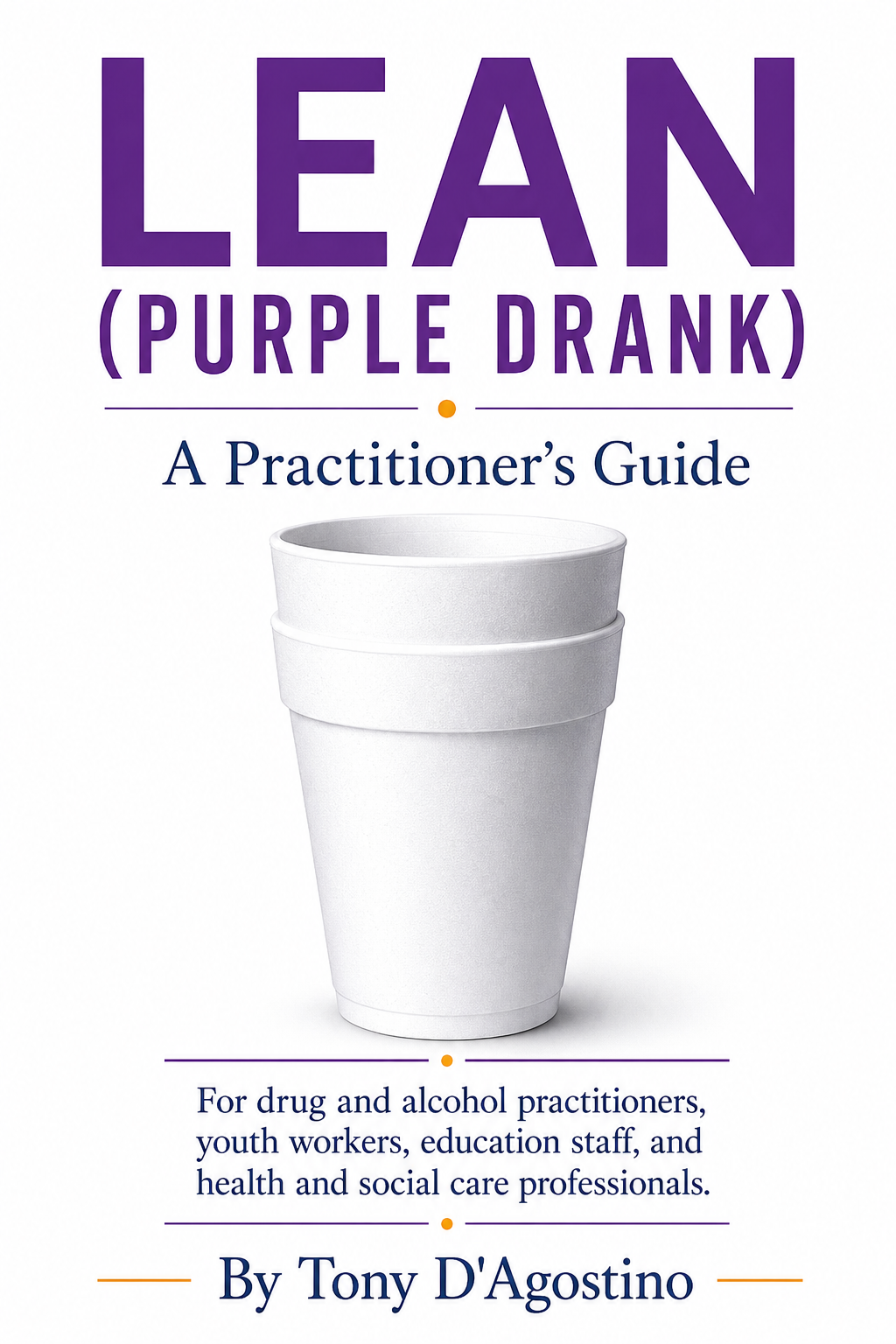
Lean (Purple Drank): A Practitioner’s Guide
By Tony D'Agostino. A practitioner-focused companion on culture, ingredients, harm reduction and professional response.
Buy on Amazon ↗Frequently asked questions
Quick answers
What type of drug is Lean?
Lean is described here as drug mixture / opioid-containing drink. Some drugs cross categories, and mixtures may contain more than one drug type.
Can Lean be identified by appearance?
No. Appearance, packaging, a logo or colour cannot reliably establish identity, strength or contamination.
When should I call 999?
Call 999 for a suspected drug emergency, including reduced consciousness, abnormal breathing, seizure, severe chest pain or severe confusion. Very slow, shallow or stopped breathing
Evidence & governance
Sources and review
Responsible organisation: TD Consultancy
Published: 5 August 2026 · Last reviewed: 5 August 2026
Next formal review: February 2027, or earlier if material safety or legal information changes.
Evidence on illicit drug composition and emerging markets can change quickly. Legal status can be compound- and preparation-specific. Links below are prioritised to current official UK guidance.