
Overview
What is Alcohol?
Common and street names
ethanol · beer · wine · spirits
Drug category
Depressant
Forms and appearance
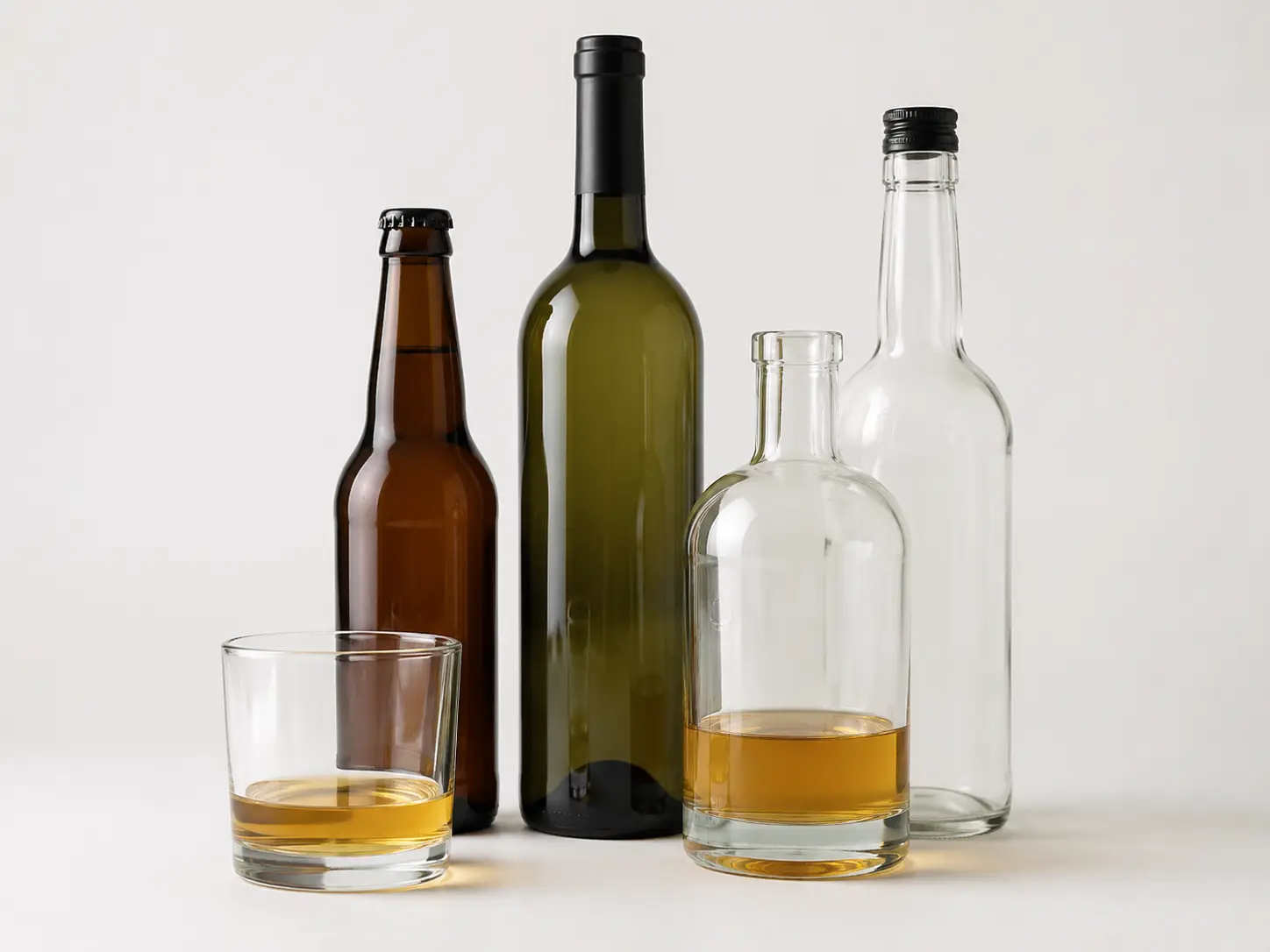
Beer, cider, wine, spirits and mixed drinks contain ethanol at different concentrations. Alcohol content should be read from the product label where available.
How it is commonly used
Alcohol is swallowed as a drink. Speed of drinking, alcohol concentration, food, body composition, health and other substances all influence intoxication.
Brain & body
How Alcohol affects signalling and behaviour
Alcohol changes several signalling systems, including GABA and glutamate, producing disinhibition at lower levels and increasing sedation and impairment as exposure rises. Repeated heavy use can produce neuroadaptation, tolerance and physical dependence.
Explore reward, cues, craving, stress, tolerance and neuroplasticity without a simplistic “hijacked brain” model.
Effects & risks
What people may experience — and what can go wrong
Commonly reported effects
- Relaxation and social disinhibition
- Slower reaction time and poorer coordination
- Impaired judgement and memory
- Increasing sedation as intoxication rises
Short-term risks
- Alcohol poisoning
- Injuries, falls and road risk
- Vomiting and aspiration
- Violence, vulnerability and impaired consent
Longer-term risks
- Dependence
- Liver, cardiovascular and neurological harm
- Several cancers
- Sleep and mental-health problems
Mental-health effects
Alcohol can temporarily reduce anxiety while worsening sleep, low mood and anxiety over time for some people. Intoxication can increase impulsivity and risk-taking.
Dependence, tolerance & withdrawal
Repeated use can change the pattern
Physical dependence can develop. Sudden withdrawal after sustained heavy drinking can be dangerous and, in severe cases, life-threatening. People who may be dependent should seek medical advice rather than stopping abruptly without support.
Mixing drugs
Interaction risks to know
Alcohol + opioids can increase sedation and respiratory depression.
Alcohol + benzodiazepines or GHB/GBL can cause profound sedation and loss of consciousness.
Alcohol + cocaine creates cocaethylene and adds cardiovascular risk.
The absence of a recorded interaction does not mean that a combination is safe. Strength, dose, health, tolerance, contamination and other substances can alter risk.
Check another combinationHarm reduction
Practical ways to reduce risk
Avoid combining alcohol with opioids, benzodiazepines, GHB/GBL or other sedatives.
Plan alcohol-free time and pace drinking rather than using intoxication as the target.
Eat before or while drinking and alternate with non-alcoholic drinks.
If dependence is possible, get clinical advice before a sudden stop.
Harm reduction can reduce some risks; it cannot make an unregulated drug, dose or combination risk-free.
Emergency
When to call 999
- Cannot be woken or stays unconscious
- Slow, irregular or stopped breathing
- Seizure
- Repeated vomiting with reduced consciousness
Treatment & support
Help does not require one fixed recovery goal
UK drug and alcohol services can assess physical health, mental health, dependence, risk, housing and support needs, then agree a plan with the person. Goals may include immediate harm reduction, stabilisation, reduction or stopping use.
Physical dependence can develop. Sudden withdrawal after sustained heavy drinking can be dangerous and, in severe cases, life-threatening. People who may be dependent should seek medical advice rather than stopping abruptly without support.
Brief history
How we got here
Fermented drinks pre-date written history. Alcohol has been used socially, ritually and medicinally across cultures, while licensing, taxation, temperance movements and public-health policy have repeatedly reshaped how it is sold and understood.
Read the history guideKey facts & misconceptions
Three useful corrections
Being able to 'hold your drink' often reflects tolerance rather than protection from harm.
Coffee, cold showers and fresh air do not reverse alcohol poisoning.
Legal status is not a measure of health risk.
Frequently asked questions
Quick answers
What type of drug is Alcohol?
Alcohol is described here as depressant. Some drugs cross categories, and mixtures may contain more than one drug type.
Can Alcohol be identified by appearance?
No. Appearance, packaging, a logo or colour cannot reliably establish identity, strength or contamination.
When should I call 999?
Call 999 for a suspected drug emergency, including reduced consciousness, abnormal breathing, seizure, severe chest pain or severe confusion. Cannot be woken or stays unconscious
Evidence & governance
Sources and review
Responsible organisation: TD Consultancy
Published: 5 August 2026 · Last reviewed: 5 August 2026
Next formal review: February 2027, or earlier if material safety or legal information changes.
Evidence on illicit drug composition and emerging markets can change quickly. Legal status can be compound- and preparation-specific. Links below are prioritised to current official UK guidance.