
Overview
What is Synthetic cannabinoids?
Common and street names
Spice · SCRAs · K2
Drug category
Synthetic cannabinoid receptor agonists
Forms and appearance
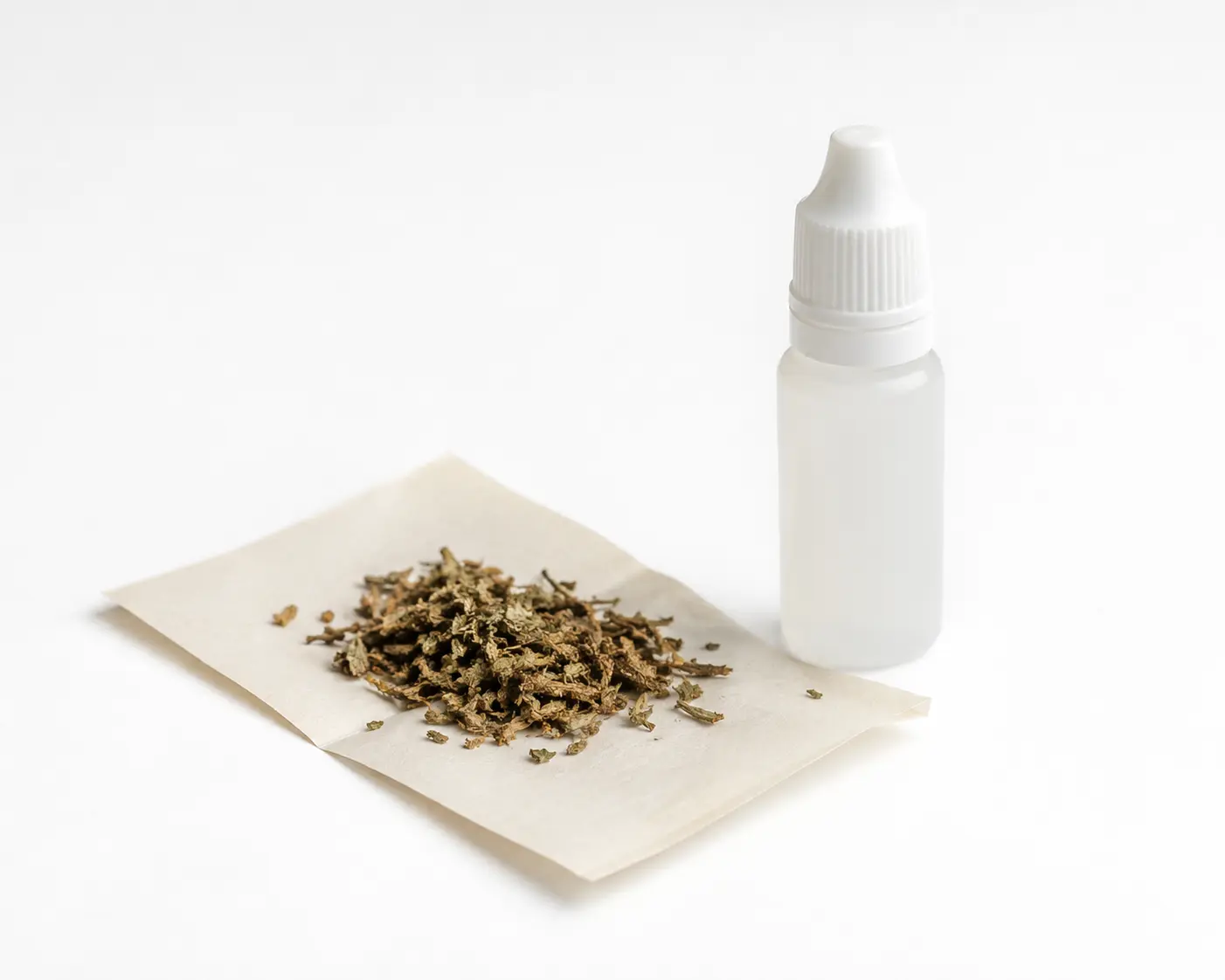
Often applied to dried herbal material or sold in liquids/vapes. Product names and appearance do not identify the active compound or concentration.
How it is commonly used
SCRAs may be smoked or vaped after being applied to plant material or liquids. Uneven distribution can create substantial variation even within one batch.
Brain & body
How Synthetic cannabinoids affects signalling and behaviour
Many SCRAs strongly activate CB1 receptors and can have higher efficacy than THC. Rapidly changing compounds and uneven application to herbal material or liquids make effects especially difficult to predict.
Explore reward, cues, craving, stress, tolerance and neuroplasticity without a simplistic “hijacked brain” model.
Effects & risks
What people may experience — and what can go wrong
Commonly reported effects
- Sedation or altered perception
- Anxiety or agitation
- Impaired coordination
- Rapid changes in consciousness
Short-term risks
- Seizure
- Severe agitation, paranoia or psychosis
- Collapse or loss of consciousness
- Cardiovascular and other unpredictable toxicity
Longer-term risks
- Dependence and withdrawal
- Persistent mental-health problems for some people
- Escalating use with short-lived effects
- Harms shaped by unstable and changing product contents
Mental-health effects
Severe anxiety, confusion, paranoia and psychotic symptoms can occur. Presentations vary widely; do not assume someone with a 'Spice' label has taken a known compound or dose.
Dependence, tolerance & withdrawal
Repeated use can change the pattern
Dependence can develop, sometimes with frequent redosing. Withdrawal may include agitation, insomnia, sweating, anxiety and gastrointestinal symptoms; severe cases warrant clinical assessment.
Mixing drugs
Interaction risks to know
Mixing with alcohol or sedatives can add impairment and reduced consciousness.
Mixing with stimulants can worsen agitation and cardiovascular strain.
Products may already contain more than one active substance.
The absence of a recorded interaction does not mean that a combination is safe. Strength, dose, health, tolerance, contamination and other substances can alter risk.
Check another combinationHarm reduction
Practical ways to reduce risk
Treat each batch as unknown; brand name and appearance do not identify contents.
Avoid using alone and avoid mixing with other drugs.
Use drug-checking services where available, while recognising limitations for rapidly changing compounds.
Seek urgent help for seizures, severe agitation, collapse or reduced consciousness.
Harm reduction can reduce some risks; it cannot make an unregulated drug, dose or combination risk-free.
Emergency
When to call 999
- Seizure
- Severe agitation or psychosis with immediate risk
- Collapse or chest pain
- Abnormal breathing or inability to wake
Treatment & support
Help does not require one fixed recovery goal
UK drug and alcohol services can assess physical health, mental health, dependence, risk, housing and support needs, then agree a plan with the person. Goals may include immediate harm reduction, stabilisation, reduction or stopping use.
Dependence can develop, sometimes with frequent redosing. Withdrawal may include agitation, insomnia, sweating, anxiety and gastrointestinal symptoms; severe cases warrant clinical assessment.
Brief history
How we got here
Many SCRAs originated as research chemicals. Non-medical markets expanded in the 2000s and 2010s, with repeated chemical changes in response to controls. More recently, semi-synthetic cannabinoids have created additional legal and toxicological complexity.
Read the history guideKey facts & misconceptions
Three useful corrections
SCRAs are not simply 'strong cannabis'.
The name 'Spice' does not refer to one chemical.
A product being sold openly does not establish its legal status or contents.
Frequently asked questions
Quick answers
What type of drug is Synthetic cannabinoids?
Synthetic cannabinoids is described here as synthetic cannabinoid receptor agonists. Some drugs cross categories, and mixtures may contain more than one drug type.
Can Synthetic cannabinoids be identified by appearance?
No. Appearance, packaging, a logo or colour cannot reliably establish identity, strength or contamination.
When should I call 999?
Call 999 for a suspected drug emergency, including reduced consciousness, abnormal breathing, seizure, severe chest pain or severe confusion. Seizure
Evidence & governance
Sources and review
Responsible organisation: TD Consultancy
Published: 5 August 2026 · Last reviewed: 5 August 2026
Next formal review: February 2027, or earlier if material safety or legal information changes.
Evidence on illicit drug composition and emerging markets can change quickly. Legal status can be compound- and preparation-specific. Links below are prioritised to current official UK guidance.